GROUND BEEF
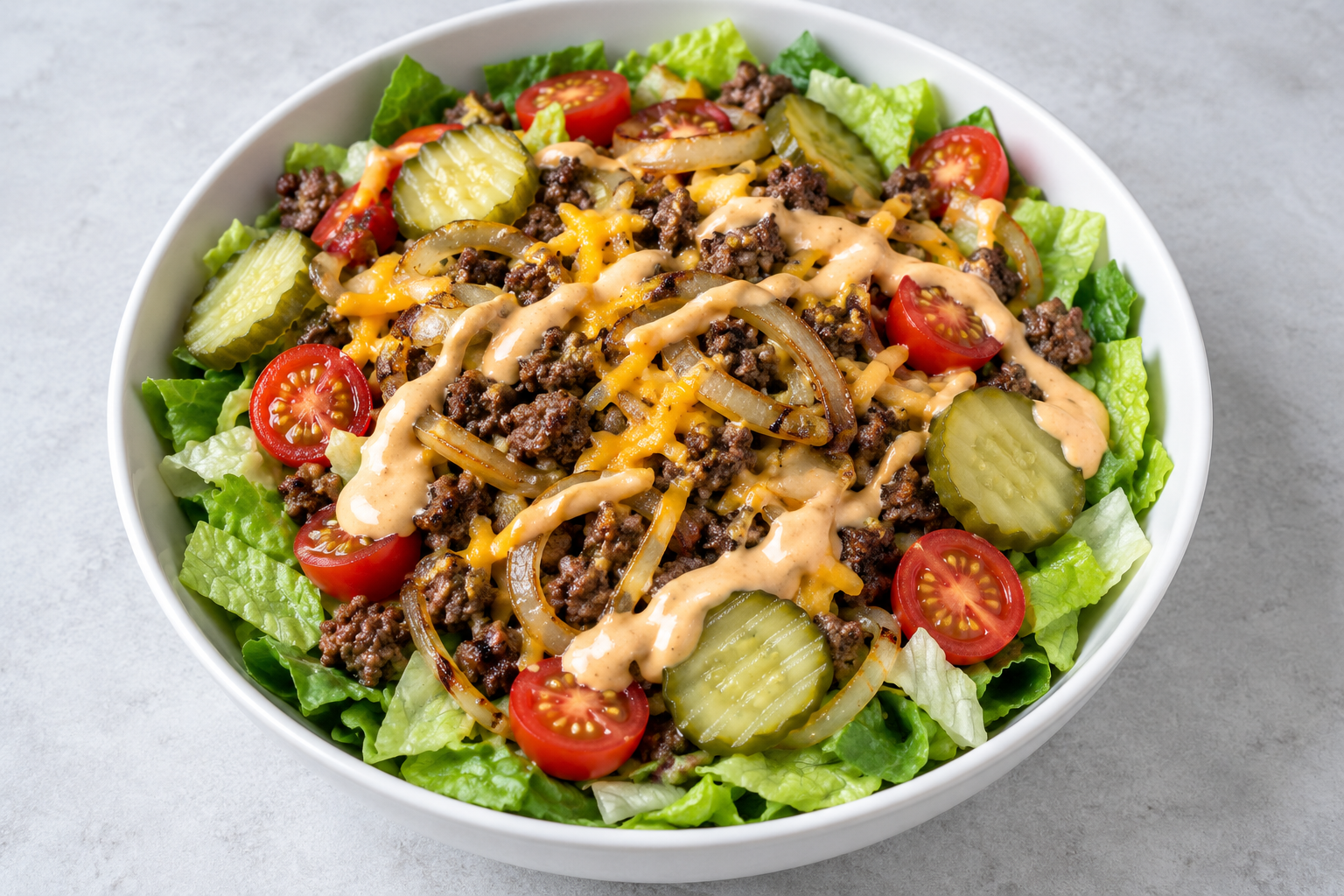
90/10 cheeseburger bowl
All the familiar cheeseburger flavors over crisp lettuce, with 90/10 ground beef, griddled onions, and a tangy yogurt burger sauce.
Estimated per serving, including the sides.
What you need
For the whole recipe · 2 servings
- 12 oz (340 g)
90% lean / 10% fat ground beef, weighed raw - 4 cups (200 g)
chopped romaine lettuce - 1 cup (150 g)
cherry tomatoes, halved - 1 small (100 g)
yellow onion, thinly sliced - ¼ cup (40 g)
sliced dill pickles, drained - ¼ cup (1 oz / 28 g)
shredded cheddar cheese - ¼ cup (60 g)
plain nonfat Greek yogurt - 1 tbsp (17 g)
ketchup - 1 tsp (5 g)
yellow mustard - 1 tsp (5 g)
distilled white vinegar - 1 tsp (4.5 g)
olive oil, for the onion - ½ tsp (1.5 g)
garlic powder - ¼ tsp (0.5 g)
black pepper
Weigh meat, fish, and vegetables before cooking. Rice is weighed cooked. Gram weights are the basis of the estimates; cup sizes and produce sizes vary.
At the griddle
About 25 minutes total
- Mix the burger sauce.Stir the Greek yogurt, ketchup, mustard, and vinegar together in a small bowl. Add a teaspoon of water if you prefer a thinner drizzle. Prepare the lettuce, tomatoes, and pickles, then divide them between two serving bowls.
- Heat the griddle.Preheat a clean, well-seasoned griddle to medium-high, leaving a medium-heat area for the onion. Keep the raw beef and its utensils separate from the salad ingredients and cooked food.
- Brown the onion.Toss the sliced onion with the measured teaspoon of oil. Cook on the medium-heat area for 8–10 minutes, turning occasionally, until softened and golden. Add a small splash of water if it starts to stick.
- Cook the 90/10 beef.While the onion cooks, put the beef on the hotter area in a few large pieces. Let it brown for 2–3 minutes, then break it into bite-size crumbles with a spatula. Add the garlic powder and pepper; turn and cook for another 5–7 minutes. Gather the beef into a thick mound and check several spots with a food thermometer, keeping the probe off the metal. All checked spots must reach at least 160°F. Cook longer if needed; color alone does not show doneness.
- Melt the cheese and build the bowls.Move excess rendered fat to the griddle's grease trap, following its instructions. Mix the cooked onion into the cooked beef, divide into two equal piles, and top each with half the cheddar. Cover briefly with a griddle dome to melt. Add one pile to each prepared salad bowl and finish each with half the burger sauce.
Your portion. One serving is half the finished recipe: beef from 6 oz (170 g) raw 90/10 ground beef, 2 cups lettuce, half the onion, tomatoes and pickles, ½ oz cheddar, and half the sauce.
The estimate includes all of the raw beef's fat plus the measured oil, cheese, and sauce; no calorie reduction is assumed for discarded fat. Different beef labels and cheese brands change the totals. A bun, rice, fries, or other additions are not included.
Contains milk. Check the mustard, ketchup, and pickle labels for other allergens.
About the nutrition estimates
Calculated from the listed weights and approximate generic ingredient values. All listed ingredients, including oil, toppings, and sides, are included. Calories are rounded to the nearest 5 and protein to the nearest gram. Different brands, cuts, substitutions, and cooking losses change the totals.
| Ingredient | Calories | Protein |
|---|---|---|
| 90/10 ground beef | 299 | 34.0 g |
| Romaine lettuce | 17 | 1.2 g |
| Cherry tomatoes | 14 | 0.7 g |
| Onion | 20 | 0.6 g |
| Dill pickles | 2 | 0.1 g |
| Cheddar | 56 | 3.5 g |
| Greek yogurt | 18 | 3.1 g |
| Ketchup | 9 | 0.1 g |
| Yellow mustard | 2 | 0.1 g |
| White vinegar | 0 | 0.0 g |
| Olive oil | 20 | 0.0 g |
| Garlic powder | 2 | 0.1 g |
| Black pepper | 1 | 0.0 g |
| Whole plate, rounded | 460 | 43 g |
Individual rows are rounded and may not add exactly to the total.
USDA FoodData Central ingredient database · USDA FoodData Central
Cooking temperatures follow FoodSafety.gov. Use a food thermometer; cooking times vary by griddle and food thickness.